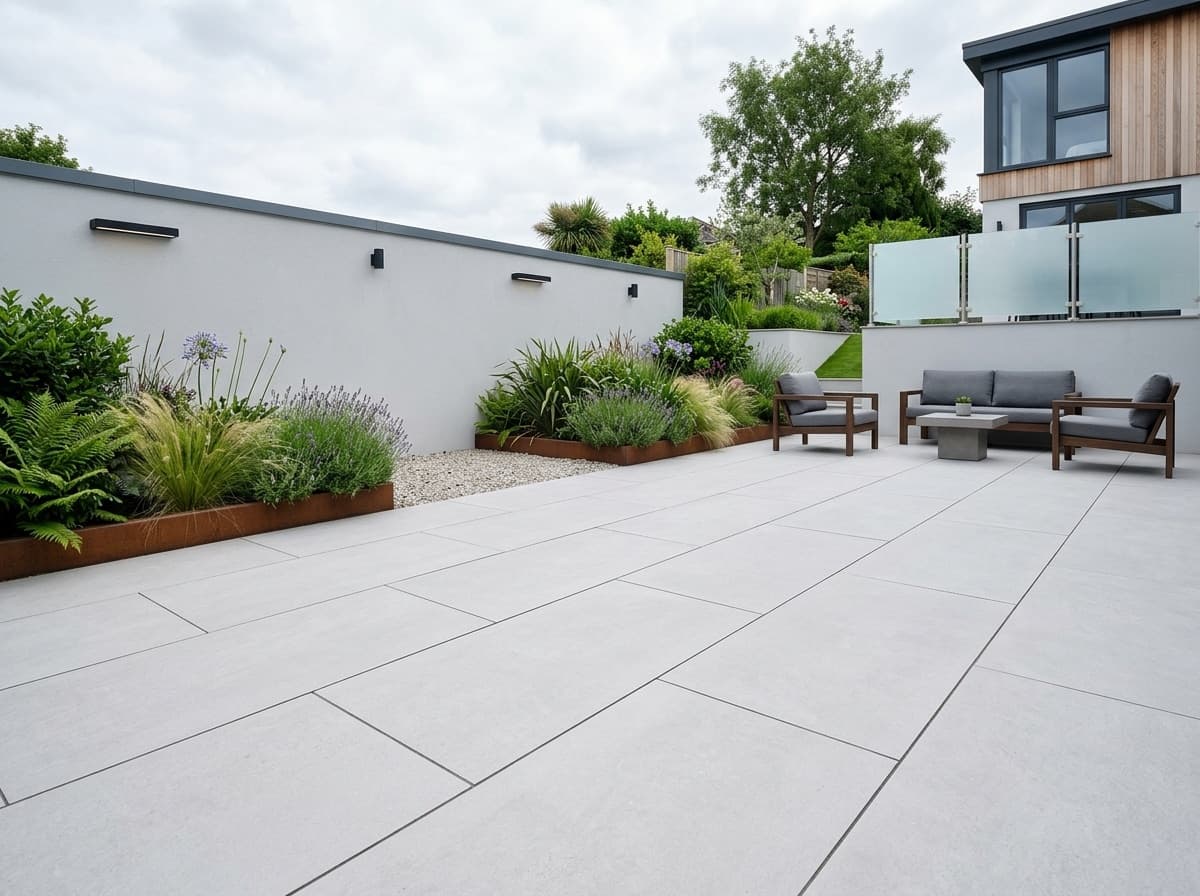
Porcelain Patios for homes in Blyth
Porcelain has become the go-to for a modern, sharp-looking patio. The slabs are dimensionally consistent, so the joints run dead straight and the surface sits flat, and because the material is dense and low-porosity it does not take up staining and algae the way more porous paving can — it washes down and comes back looking like it did. Finishes run from stone and slate effects through to timber-effect planks and plain contemporary greys. It is a less forgiving material to lay than natural stone, so it needs a primed slurry bed, precise cutting and accurate levels, which is exactly the sort of detail we plan out before starting rather than working around as we go.
Working in Blyth
Blyth is a historic village north of Worksop, once an important stop on the Great North Road, and it has a conservation area covering much of its centre — a broad green, period stone and brick properties, and the Norman priory church. Material choice genuinely matters in a setting like this: natural Indian sandstone, muted tones and stone walling matched to what is already there sit properly against these frontages, whereas a bright modern block paving pattern would read as out of place against the historic streetscape. Mature boundary walls are a feature through the village and are usually repairable, and rebuilding a section in matched stone with the original coping detail is what keeps a frontage looking as it should.
What's included
- Dimensionally consistent — dead straight joints
- Dense, low-porosity surface that washes down
- Stone, slate and timber-effect finishes
- Primed slurry bed and precision cutting