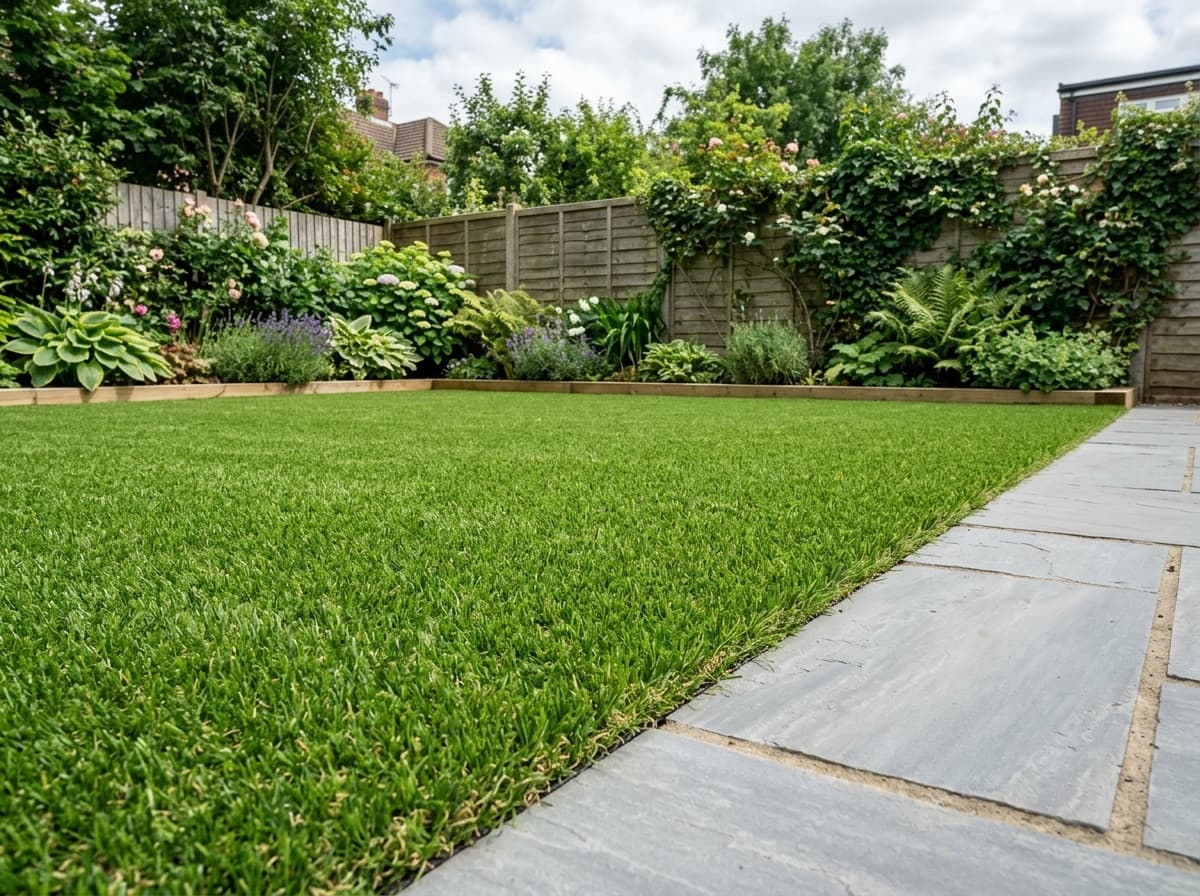
Artificial Grass for homes in Belper
Artificial grass only looks convincing if the ground underneath is right, and that is where most of the work actually is. We lift the old lawn, excavate, and build a compacted, free-draining base so water goes away rather than sitting under the surface, then lay a weed membrane, roll the grass out and let it settle before cutting it in. Joints are glued on tape and the pile direction matched across them so the seam disappears rather than showing as a line down the lawn, and the perimeter is fixed and trimmed tight to the paving, walls and borders. There is a real difference between grass specifications in pile height, density and colour tone, so we will get samples in front of you first. Once it is down, it stays the same shape all year — no mowing, no bare muddy patches through the winter, and it takes being walked on constantly by kids and dogs.
Working in Belper
Belper sits in the Derwent Valley Mills World Heritage Site, and that gives the town a distinctive character worth building sympathetically with. The mill workers' terraces along the older streets, the gritstone properties, and the steep streets climbing away from the river all set a material palette that a generic bright block paving finish tends to fight rather than complement — natural sandstone, muted greys and buffs, and darker aggregates usually sit far better against local stone. The valley setting also means gradient is a constant: rear gardens frequently rise or fall sharply away from the house, so a large proportion of Belper work involves retaining walls, terracing and steps to turn an unusable slope into level, usable space before any of the finished surfaces go on.
What's included
- Excavated, compacted, free-draining base
- Weed membrane and secured perimeter
- Glued joints with matched pile direction
- Samples shown before anything is ordered